Most people who move to Maricopa from the Phoenix metro area, from California, or from the Midwest notice something about the water within the first week. Their dishes come out of the dishwasher with a white film. Their glass shower doors develop a cloudy haze. Their skin feels different. The soap does not lather the way it used to. These are not complaints about the water being unsafe. They are the sensory signals of extremely hard water, and in Maricopa, the hardness levels are among the highest in Arizona.
Where Maricopa's water comes from — and why it is not like Phoenix's
Most Phoenix metro communities receive water from the Central Arizona Project, a 336-mile canal system that carries Colorado River water across the desert to central Arizona. CAP water is surface water. Before it reaches your tap, it travels through treatment plants that adjust pH, add disinfectants, and produce water with a hardness typically in the 13 to 17 grains per gallon (GPG) range, which is considered moderately hard by national standards.
Maricopa does not receive CAP water. The city's water supply comes from the Maricopa-Stanfield sub-basin aquifer, a deep groundwater system beneath the Pinal Valley floor. Global Water Resources (operating as Global Water-Palo Verde Utilities Company in Maricopa) draws from this aquifer and distributes the water to homes and businesses throughout the city. Global Water has received a Designation of Assured Water Supply from the Arizona Department of Water Resources, confirming the long-term availability of the source.
The critical difference is what that aquifer water contains. Groundwater that has been in contact with the calcium-rich limestone and gypsum formations of the Pinal Valley for thousands of years picks up calcium and magnesium ions at concentrations far exceeding what is typical in surface water supplies. The result: Maricopa's water consistently measures 25 to 35 GPG, placing it among the hardest municipal water supplies in the state.
What "hardness" means in practical terms
Water hardness is measured in grains per gallon (GPG) or in milligrams per liter (mg/L), also called parts per million (ppm). One GPG equals 17.1 mg/L. The USGS classifies water above 10.5 GPG as "very hard." The national average for U.S. household water is approximately 6 GPG.
| Category | GPG Range | mg/L Range |
|---|---|---|
| Soft | 0 – 3.5 GPG | 0 – 60 mg/L |
| Moderately hard | 3.5 – 7 GPG | 60 – 120 mg/L |
| Hard | 7 – 10.5 GPG | 120 – 180 mg/L |
| Very hard | Over 10.5 GPG | Over 180 mg/L |
| Phoenix metro (CAP) | 13 – 17 GPG | 222 – 291 mg/L |
| Maricopa (GWR) | 25 – 35 GPG | 428 – 599 mg/L |
Maricopa's 25 to 35 GPG represents water that is 2.4 to 3.3 times harder than the threshold for "very hard" water and up to six times harder than the national average. A Chandler homeowner asking a Phoenix water treatment company to size a system for their Maricopa home will typically get a system that is significantly undersized, because the default specification is built around Phoenix metro hardness, not Pinal Valley groundwater.
What Maricopa's hard water does to your home
Water heaters
The most expensive consequence of hard water in Maricopa is accelerated water heater failure. When cold water enters a tank water heater, the heat causes dissolved calcium and magnesium to precipitate out of solution and settle at the bottom of the tank as mineral scale. In a Phoenix home at 13 GPG, this process takes years to accumulate into a significant layer. In a Maricopa home at 25 to 35 GPG, a measurable scale layer forms within the first year or two of operation.
That scale acts as an insulator between the heating element and the water. The element runs longer and hotter to compensate, drawing more energy and experiencing more thermal stress. The rumbling or popping sound that Maricopa homeowners commonly describe from their water heaters is the sound of trapped water boiling beneath the scale layer during the heating cycle. Water heaters rated for 8 to 12 years in national averages routinely need replacement in 6 to 9 years in Maricopa without a water softener.
Fixture aerators and shower heads
The small mesh screen at the end of every faucet (the aerator) traps calcium deposits from the water passing through it. In Maricopa's hard water, aerators in homes without softeners typically need cleaning or replacement every 6 to 18 months. Shower heads clog in the same way, producing the irregular spray pattern that Maricopa homeowners notice before the problem is diagnosed. These are cosmetic and functional inconveniences, but they are also early signals that the same mineral deposits are accumulating inside appliances and pipes where they cannot be seen.
Copper supply lines and slab leak risk
The most consequential hard water effect in Maricopa's 2005-to-2020 master-planned homes is the accelerated corrosion of copper supply lines embedded in slab foundations. Calcium and magnesium ions in solution react with the copper pipe interior through a process that progressively pits and thins the pipe wall. When the pipe wall reaches a critical thickness, a pinhole leak develops.
In a soft-water market, copper pipe life in residential construction is measured in decades. In Maricopa's 25 to 35 GPG environment, corrosion progression is faster, and homes from the 2005-to-2015 construction era are now entering the age range where the first pinhole failures appear in the slab-embedded hot water lines. This is the primary driver of slab leak calls across Rancho El Dorado, Tortosa, and Cobblestone Farms. A properly sized water softener slows this corrosion by removing the calcium and magnesium ions before they reach the pipe interior.
What Maricopa homeowners do about hard water
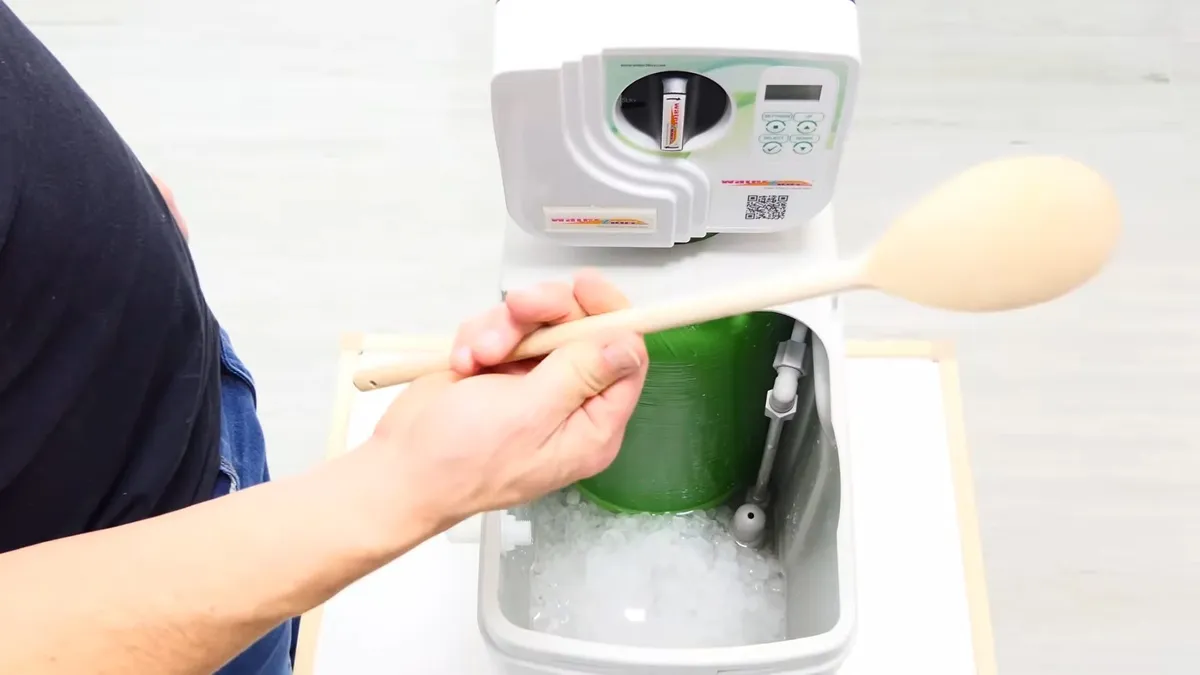
The standard solution in Maricopa's master-planned homes is a paired installation: a whole-home water softener at the point of entry, which removes calcium and magnesium from the entire supply, and an under-sink reverse osmosis system at the kitchen faucet, which reduces the remaining total dissolved solids in drinking water. The softener protects appliances, pipes, and fixtures throughout the home. The RO system handles the water quality that the softener alone does not resolve.
Homeowners in Rancho El Dorado, Province, and Glennwilde who have both systems consistently report the difference: no scale on fixtures, better soap lathering, longer appliance life, and drinking water that compares favorably to bottled water. Neither system requires any change to the Global Water Resources supply or billing; both systems treat water after it enters the home.
For homeowners who have lived in Maricopa for years without a softener, the accumulated scale in water heaters, aerators, and supply lines cannot be removed by installing a softener retroactively. The softener prevents future accumulation. Pairing a new softener installation with a water heater service or replacement addresses both the root cause and the most visible symptom at the same time.
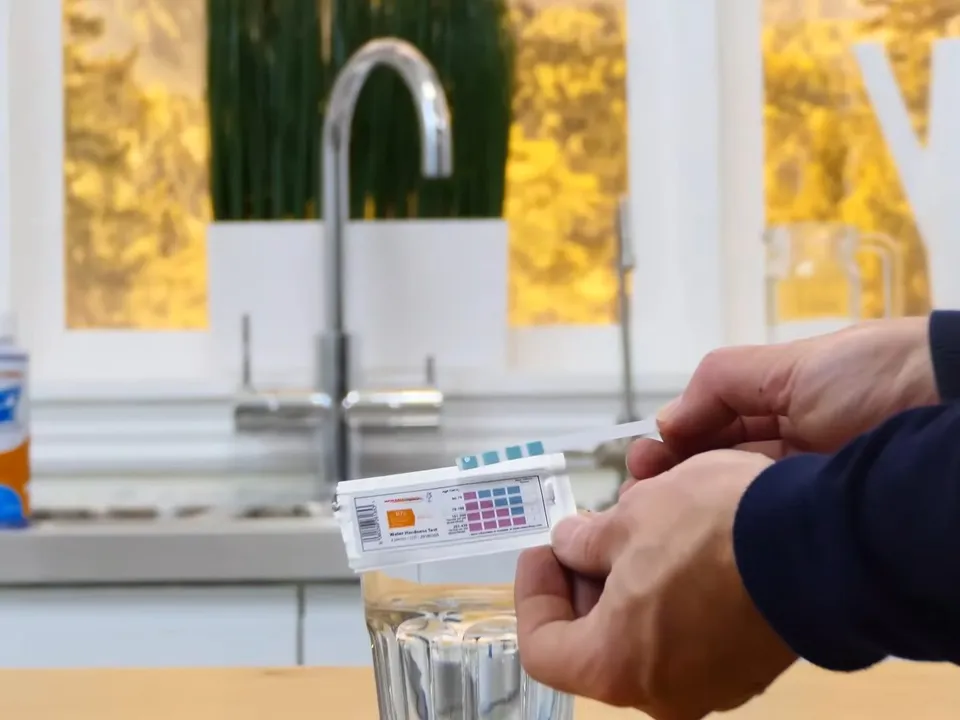
Quick test: If you are not sure how hard your water is, fill a clear bottle halfway with water from your kitchen cold tap, add a few drops of dish soap, shake vigorously, and observe the lather. Hard water produces minimal lather and a cloudy film. Soft water produces abundant, lasting lather. In Maricopa on GWR supply without a softener, the result will clearly indicate hard water.