Walk-in shower conversions are among the most requested plumbing projects in Province, Maricopa's Robson Resort active adult community. The request is consistent: remove the standard tub-and-shower combination that came with the home when it was built, and replace it with a shower enclosure that has no curb or a very low threshold at the entry point. For Province residents who are managing joint concerns, balance issues, or simply planning ahead for aging-in-place comfort, the standard 5.5-to-6-inch tub curb that must be stepped over to enter a shower becomes a meaningful daily obstacle. A curbless or low-threshold shower eliminates it.
Why Province residents request walk-in conversions specifically
Province is a 55-plus active adult community. The demographic characteristic that most directly shapes the plumbing requests we receive from Province is the commitment to aging in place: most Province residents intend to remain in their homes for the long term and are making deliberate modifications to ensure the home remains accessible and safe as mobility changes over time. The walk-in shower conversion is the single most impactful accessibility modification available for a bathroom, because the shower is used daily and a curb-crossing entry point is among the highest-risk locations for bathroom falls in older adults.
Province homes were built from approximately 2006 through the late 2010s, which means they contain builder-standard bathrooms designed to cost and code rather than for active adult accessibility. Standard tub-shower combinations with 5.5-inch curbs, round faucet knobs rather than lever handles, and 15-inch-height toilets rather than 17-to-19-inch comfort-height models are typical in Province's original construction. Walk-in shower conversion, comfort-height toilet replacement, and lever-handle faucet installation often proceed together as a coordinated accessibility update in the same Province bathroom renovation.
What "walk-in shower conversion" means from the plumbing perspective
The term "walk-in shower conversion" describes a complete bathroom renovation scope in common usage, but the plumbing component is specific and can be separated from the tile, enclosure, glass, and finishing work that the general contractor or tile installer handles. Understanding the plumbing scope helps Province residents know what to expect from the licensed plumber's portion of the project and how it sequences with the other trades.
Drain repositioning
The original bathtub drain is positioned at one end of the tub, typically the foot end. A shower drain in a walk-in shower is most effectively positioned toward the center of the shower floor or at the end opposite the showerhead, so that water flows uniformly toward the drain across the sloped pan surface. If the new shower's drain position does not align with the existing drain, the drain line must be extended or relocated, which requires opening the slab to reposition the drain pipe. This is the highest-cost element of drain repositioning in a Province home on a concrete slab foundation. In some bathroom layouts, the existing drain position can be incorporated into the shower design with a linear drain channel rather than a center drain, which allows the tray to slope toward the existing drain location without moving the pipe.
Curbless pan or liner system installation
The shower floor in a walk-in conversion must slope uniformly toward the drain from all sides without a curb at the entry threshold. This is achieved using either a prefabricated curbless shower pan sized for the opening, or a site-built mortar bed sloped to drain with a waterproof liner. Prefabricated curbless pans are available in standard sizes and are faster to install. Site-built mud-bed floors with liner systems are more flexible for non-standard dimensions and allow custom tile finishes. The plumber installs the drain body and the liner system or pan; the tile installer applies the finished floor surface on top.
Shower valve reconfiguration
A tub-shower combination has a diverter valve that routes water between the tub spout and the shower head. A shower-only installation requires a standard pressure-balance or thermostatic shower valve without the tub spout and diverter. We remove the original valve trim and diverter and install an appropriate shower-only valve. Arizona Plumbing Code requires pressure-balance or thermostatic valves on all new shower installations, providing scald protection by preventing the water temperature from exceeding 120 degrees Fahrenheit when cold water demand elsewhere in the home causes a pressure drop.
Grab bar blocking installation
Grab bars must be anchored into solid backing material behind the wall surface to support a person's full weight during a fall or balance recovery. Standard drywall cannot support grab bars regardless of the fastener used. The correct installation requires 2x6 lumber or 3/4-inch plywood blocking in the wall cavity behind the shower walls, at the appropriate heights for the grab bar placement plan.
The critical Province-specific timing consideration: blocking must be installed before the shower walls are tiled or covered. Retrofitting grab bars into an existing tiled shower wall requires cutting the tile, installing backing in the stud bay, and re-tiling a section of the wall. This is significantly more expensive than installing the blocking during the renovation while the wall is already open. For any Province homeowner planning a walk-in shower conversion, we strongly recommend specifying the blocking installation as part of the plumbing rough-in, even if grab bars are not being installed in the current renovation. The blocking costs a fraction of a retrofit and makes future grab bar installation a simple surface-mounted operation.
Province HOA coordination for bathroom remodeling
Province Community Association governs exterior modifications, contractor hours, and access requirements for work performed within the community. Interior bathroom remodeling that does not affect the exterior of the home or require driveway access typically does not require HOA approval, but contractors working in Province must be aware of and comply with approved working hours (generally 7 AM to 6 PM on weekdays in most Province sections) and documentation requirements for licensed and insured contractors.
We carry documentation of our licensed and insured status in the format Province Community Association requires and schedule all Province work within approved contractor hours. For Province residents with specific scheduling considerations around medical appointments, transportation needs, or the Province social calendar, we work to minimize the number of service visits and coordinate with the renovation sequence so that shower water service interruptions are as short as possible.
The contractor sequence for a Province walk-in shower conversion
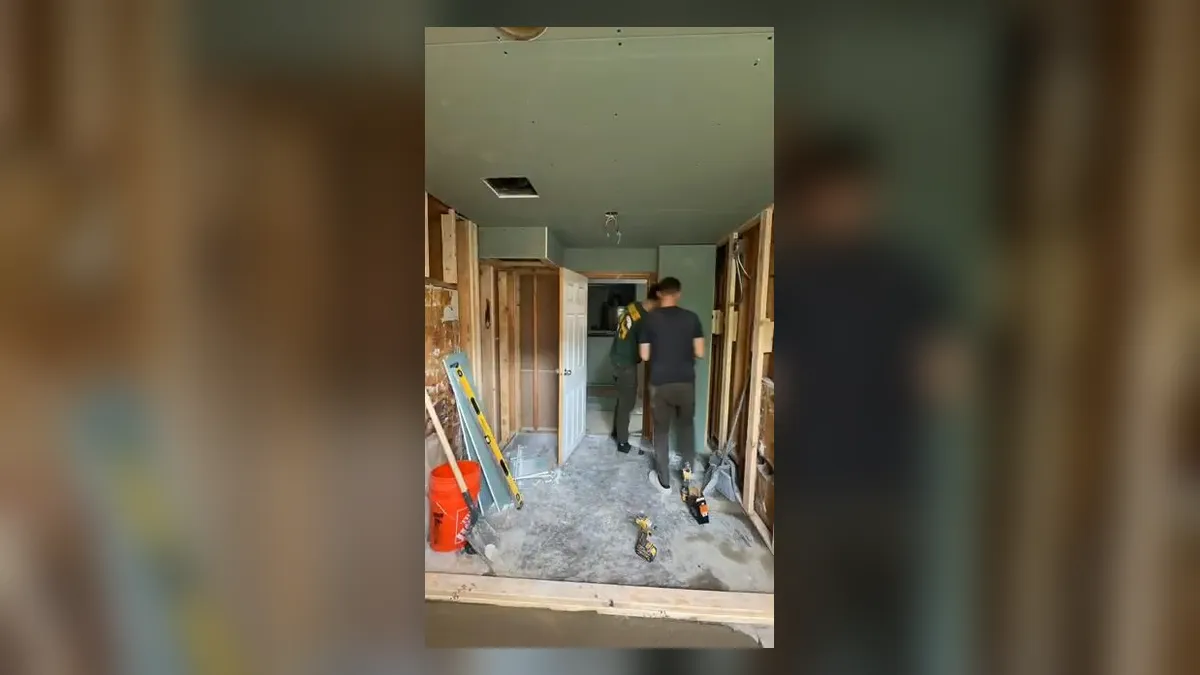
Understanding the sequence of trades helps Province residents coordinate the renovation efficiently. The plumber is the first trade in any walk-in shower conversion: rough-in work must be completed before any tile, wall board, or enclosure goes up. The sequence: plumber performs demolition of the tub and original valve, repositions the drain if needed, installs the drain body and liner system, roughs in the new shower valve, and installs grab bar blocking in the wall framing. After the rough-in is inspected and approved, the tile contractor or general contractor installs backer board, applies the shower pan material, tiles the walls and floor, and installs the enclosure. The plumber returns for trim-out: installing the valve trim, showerhead, and grab bars if included in the scope. The plumber is not the last trade in the bathroom, but the first.
For Province homeowners managing a broader accessibility renovation that also includes a comfort-height toilet and lever-handle faucets in the same bathroom visit, we coordinate all the plumbing scope in one or two service calls, minimizing disruption and allowing the tile contractor to work continuously after the rough-in is complete.