
The water softener sizing guides published by most national brands and general plumbing websites use a baseline water hardness of around 10 to 15 grains per gallon (GPG). That is appropriate for Phoenix metro homeowners on CAP supply, which typically runs 13 to 17 GPG. It is significantly wrong for Maricopa, where Global Water Resources groundwater consistently measures 25 to 35 GPG. Using a Phoenix-calibrated sizing guide to buy a softener for a Maricopa home is one of the most common reasons homeowners end up with a system that works hard, burns through salt quickly, and still leaves detectable hardness in the water.
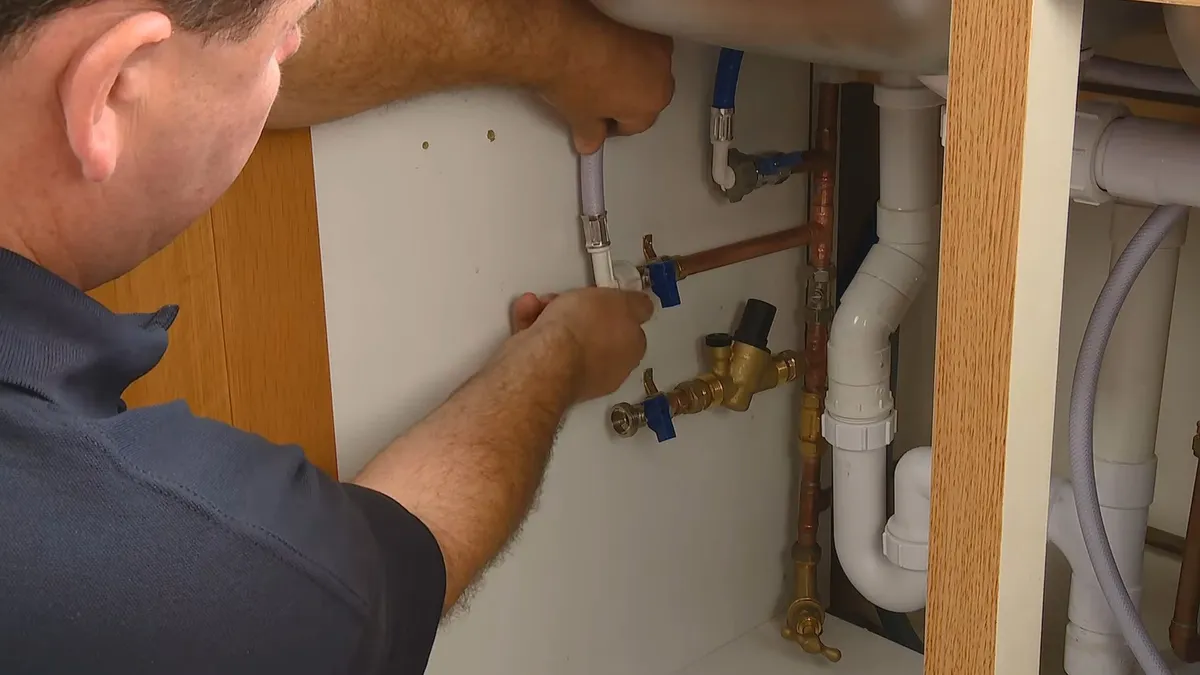
The standard sizing formula and where it breaks down for Maricopa
Water softener grain capacity is sized using a formula that estimates how much hardness the system needs to remove between regeneration cycles. The standard calculation:
People × Daily gallons per person × Water hardness (GPG) × Days between regenerations
Most sizing guides plug in 75 gallons per person per day and 7 days between regenerations. Here is how the same household size produces very different capacity requirements depending on water hardness:
| Household | GPG (Phoenix 13) | Required Grains | GPG (Maricopa 25) | Required Grains | GPG (Maricopa 35) | Required Grains |
|---|---|---|---|---|---|---|
| 2 people | 13 GPG | 13,650 | 25 GPG | 26,250 | 35 GPG | 36,750 |
| 4 people | 13 GPG | 27,300 | 25 GPG | 52,500 | 35 GPG | 73,500 |
| 6 people | 13 GPG | 40,950 | 25 GPG | 78,750 | 35 GPG | 110,250 |
A standard 32,000 grain softener is frequently recommended for a 4-person Phoenix home and works adequately there. At Maricopa's 25 GPG, that same household needs 52,500 grains of capacity: a 48,000 or 64,000 grain unit is needed. At 35 GPG, they need 73,500 grains: only a 64,000 grain single-tank or a twin-tank system meets that demand. Installing a 32,000 grain softener in a Maricopa home with four occupants means the system either regenerates very frequently (running through salt and water quickly) or fails to soften completely between cycles.
Testing your actual hardness before buying
The 25 to 35 GPG range is the broad Maricopa average. Your home's actual hardness depends on which Global Water Resources distribution zone you are in and varies slightly by season as aquifer draw patterns change. Before committing to a specific grain capacity, a test at your kitchen cold tap gives you the precise number to use in the sizing calculation.
Several options: a mail-in water test kit from a certified laboratory, a hardness test strip from a plumbing or hardware supply store, or a test performed during a softener consultation visit. The plumbing supply store strips are reasonably accurate for hardness and cost only a few dollars. They will tell you whether you are at the low end of Maricopa's range (25 GPG) or the high end (35+ GPG), which materially affects which size softener to specify.
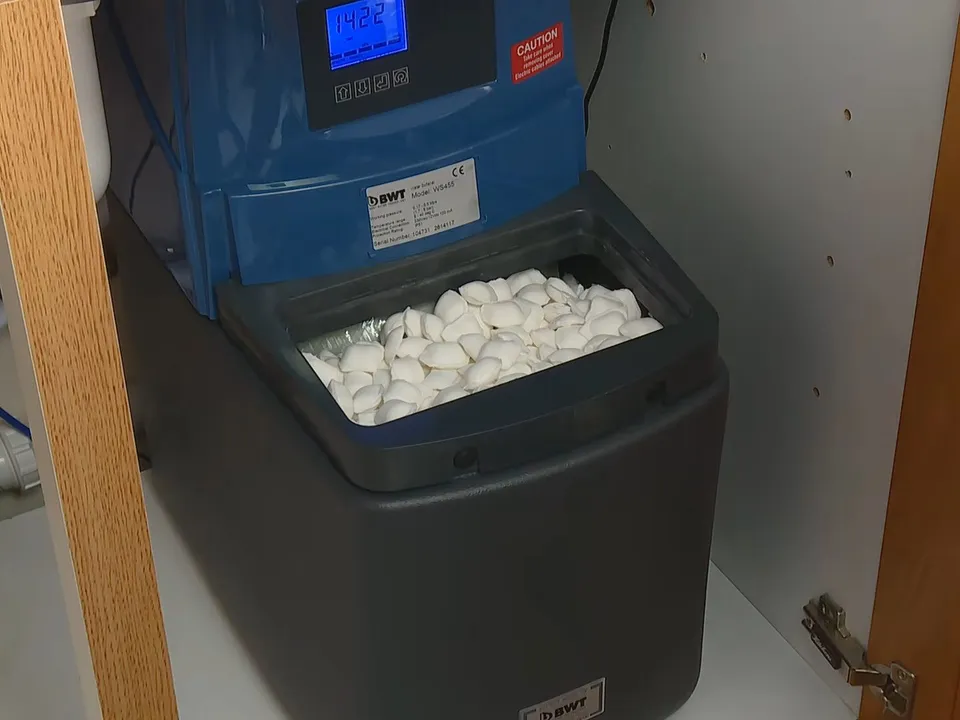
Province vs. Rancho El Dorado: how home size affects sizing
Home size and fixture count matter alongside household occupancy because larger homes use more water through more fixtures simultaneously. A Province active adult home with 2 residents but 3 full bathrooms, a kitchen with a dishwasher, a laundry room with daily use, and an irrigation system has higher peak demand than a smaller Glennwilde home with the same two residents. The irrigation connection is a meaningful variable: if the softener is plumbed to treat irrigation water, the grain capacity calculation must include that outdoor use volume.
Most installer recommendations for Maricopa fall into two tiers: 48,000 grain single-tank for 2-to-3-person households or smaller homes, and 64,000 grain single-tank or twin-tank configurations for 4-person-plus households and large-format homes like those in The Lakes at Rancho El Dorado. Province homes that irrigate with softened water and have higher hot-tub or pool fill usage should be sized toward the upper end of these ranges.
Demand-initiated vs. time-clock regeneration in Maricopa
All ion exchange softeners periodically flush the resin bed with concentrated brine to recharge it. How the system decides when to regenerate has a meaningful impact on salt consumption and water use in Maricopa's high-hardness environment.
Time-clock regeneration runs the regeneration cycle on a fixed schedule (every 7 days, for example), regardless of how much water has actually been used. In a Phoenix home where the resin takes a full week to approach depletion, this works reasonably well. In a Maricopa home at 35 GPG, a 4-person household can deplete a 48,000 grain resin in 5 days of normal use. A 7-day clock means the system is trying to soften on exhausted resin for the last 2 days of the cycle.
Demand-initiated regeneration (DIR) monitors actual water volume processed and regenerates only when the resin reaches a specified depletion threshold. In Maricopa's high-demand environment, DIR units consistently use less salt than time-clock units because they regenerate exactly when needed, not on an arbitrary schedule. They also use less water because they avoid unnecessary regeneration cycles. For a home on Global Water Resources where water billing matters, DIR is the more water-efficient choice and the one we recommend for most Maricopa installations.
What undersizing feels like in a Maricopa home
A softener that is undersized for Maricopa's hardness typically shows its limitations within the first 6 to 12 months of operation. The most common complaints: dishes still show spotting despite the softener being in service, the salt bag empties faster than expected, and the skin and hair benefit that comes with truly soft water is partial rather than complete. Testing outgoing water hardness with a test strip after a normal usage day, not immediately following a regeneration cycle, reveals whether the system is keeping up. Outgoing hardness above 3 to 5 GPG in a Maricopa softened system indicates the unit is undersized or the regeneration settings need adjustment.
Sizing shortcut: For a Maricopa 4-person home on GWR supply at 25 GPG, the minimum appropriate softener is 48,000 grains. At 30 GPG, choose 64,000 grains. At 35 GPG or a large home with high fixture count, size to 64,000 grains or twin-tank. These are the numbers we use as our starting point before adjusting for irrigation coverage, pool connections, and household water use patterns.