Every year, Global Water Resources is required by federal law to mail or make available a Consumer Confidence Report (CCR) to every customer they serve. Most Maricopa homeowners have either never opened it, or have opened it and found it confusing. The report uses technical language calibrated for regulatory agencies, not for the homeowner trying to understand whether their water is affecting their plumbing or their family's health. This guide walks through the key numbers in your Global Water Resources annual report and explains what they mean in plain terms.
What the Consumer Confidence Report is and where to find it
The Consumer Confidence Report is an annual water quality disclosure required under the Safe Drinking Water Act. Every water utility in the United States that serves 25 or more people must publish one by July 1 of each year covering the previous calendar year's water quality data. Global Water Resources publishes CCRs for each of its service entities. In Maricopa, the relevant entity is Global Water-Palo Verde Utilities Company, which serves the 85138 and 85139 ZIP codes.
You can find the most recent CCR at gwresources.com under the water quality section. The EPA also maintains a CCR database online where you can search by utility name or ZIP code. If you have difficulty finding your specific report, the customer service number for Global Water Resources in Maricopa is (866) 940-1102.
The report is legally required to be accurate and based on actual samples collected throughout the year. It is not marketing material. The numbers it contains represent real measurements from GWR's distribution system and are submitted to the Arizona Department of Environmental Quality for regulatory review.
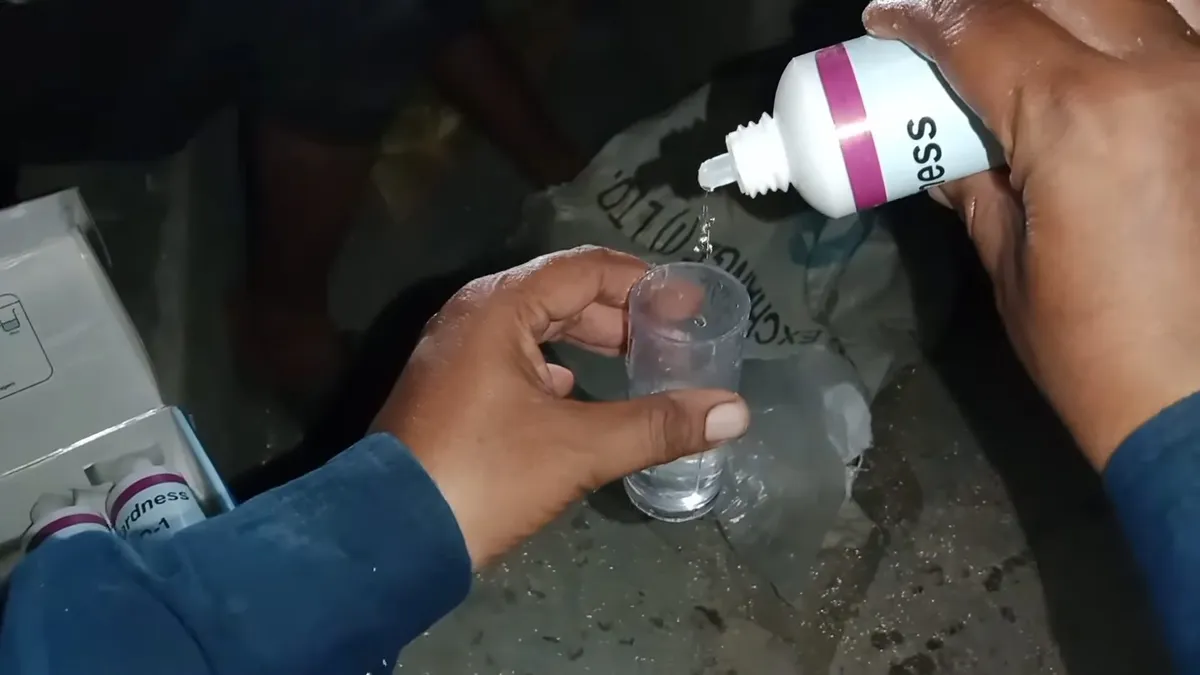
The hardness number: the most important figure for homeowners
Water hardness is typically reported in the CCR as milligrams per liter of calcium carbonate (mg/L as CaCO3). To convert to the grains per gallon (GPG) unit used by softener manufacturers and plumbers, divide the mg/L number by 17.1.
For Maricopa's GWR supply, the hardness reported in recent CCRs has typically been in the range of 400 to 600 mg/L as CaCO3, which converts to approximately 23 to 35 GPG. This is the number to use when sizing a water softener for your home. The report may show a range rather than a single number because hardness varies by season and by which wells in the distribution system are actively drawing at the time of sampling.
Key parameters explained: what each number tells you
Total dissolved solids (TDS)
TDS measures the total concentration of all dissolved substances in the water, expressed in mg/L. The EPA has set a secondary standard for TDS at 500 mg/L, meaning water above that level may have aesthetic concerns (taste, odor, appearance) but is not necessarily a health risk at normal exposure. Maricopa's GWR supply often measures above 500 mg/L TDS, which explains the mineral taste that homeowners on unfiltered supply commonly notice and why a reverse osmosis system is such a common addition in Maricopa homes.
Chloramines
GWR, like most modern water utilities, uses chloramines rather than free chlorine for disinfection. Chloramines are formed by combining chlorine with ammonia and provide a more stable disinfection residual through long distribution systems. The CCR will show chloramine levels as "Total Trihalomethanes" and "Haloacetic Acids" — byproducts of the disinfection process as well as the chloramine residual itself. The regulatory limit is 4 mg/L for chloramines as disinfectant residual.
Chloramines are harder to remove from water than free chlorine. Standard activated carbon filters remove chlorine very effectively. Removing chloramines requires either a longer contact time with carbon media or a catalytic carbon block filter specifically rated for chloramine reduction. If the metallic or chemical taste in Maricopa tap water is a concern, a whole-home carbon filtration system upstream of the softener, using catalytic carbon media, addresses chloramines along with taste and odor compounds.
Arsenic
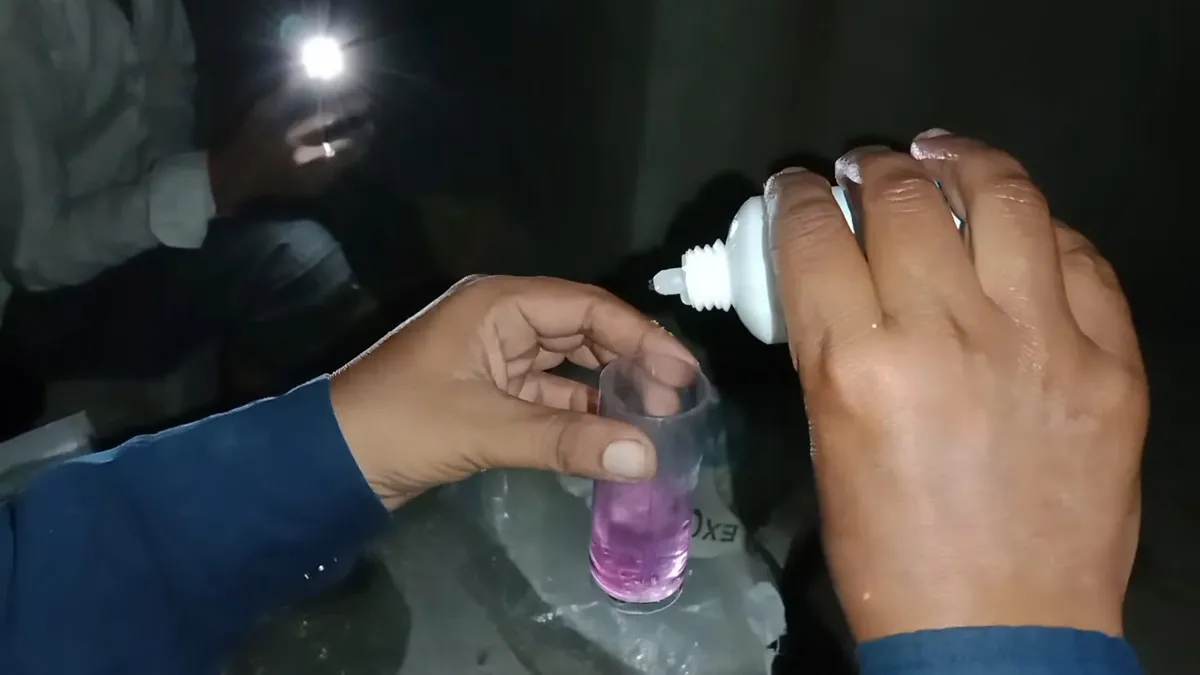
Arsenic is a naturally occurring element in many Arizona groundwater sources. The EPA maximum contaminant level (MCL) for arsenic is 10 micrograms per liter (µg/L). GWR's annual report will show measured arsenic levels in the Maricopa distribution system. If the reported level is at or near the MCL, a reverse osmosis system is the most effective residential treatment option, as RO removes 90 to 99 percent of dissolved arsenic.
Arsenic at levels below the MCL is legal and technically compliant. However, some homeowners choose to add an RO system specifically to reduce arsenic in drinking water as a precautionary measure. The CCR will clearly state the measured level alongside the regulatory limit, so you can assess the margin.
Nitrates
Nitrates (reported as nitrate-nitrogen, or NO3-N) in groundwater are a concern in agricultural areas, where fertilizer application can introduce nitrates into the aquifer over time. The Maricopa-Stanfield sub-basin sits in an agricultural region, and GWR's CCR will show measured nitrate levels. The EPA limit is 10 mg/L as N. Nitrate levels significantly below 10 mg/L are not an immediate health concern for adults; the primary at-risk population is infants under 6 months. If the CCR shows nitrate levels approaching the MCL, an RO system effectively removes nitrates from drinking water.
pH
The pH of Maricopa's water from GWR is typically in the 7.5 to 8.5 range, which is mildly to moderately alkaline. Water at this pH level is not a direct plumbing concern, but it does interact with copper pipe corrosion rate. Slightly alkaline water can be either mildly protective or corrosive to copper depending on other water chemistry parameters. The CCR will show the average pH alongside the distribution range if variability exists across the system.
What the report does not tell you
The Consumer Confidence Report shows measurements at the point of sampling in the distribution system, not at your specific tap. Your home's internal plumbing (including the material of your supply lines, the age of your fixtures, and any galvanized sections in an older home) can modify water quality by the time it reaches your kitchen faucet. Copper leaching from corroding pipes can elevate copper levels above what the distribution system shows. Scale accumulation in an unserviced water heater can introduce additional mineral content into hot water. Lead can leach from older solder joints in pre-1986 construction, though Maricopa's post-2000 housing stock is not typically affected.
If you want to know the exact water quality at your specific tap, a point-of-use water test from a certified laboratory is the right tool. Test kits are available by mail and provide measurements directly at your kitchen faucet rather than from the distribution system sample points.
If you want to access your GWR report: Visit gwresources.com and navigate to the Water Quality section, or call GWR customer service at (866) 940-1102 and request the current Consumer Confidence Report for the Maricopa service area. Asking specifically for the "Palo Verde Utilities" CCR will help the customer service team find the right document.