Arizona's official monsoon season runs from June 15 through September 30. In the Phoenix metro, the monsoon is best known for its dramatic dust storms and flash flooding. In Maricopa specifically, the monsoon's most consequential effect on residential plumbing is less visible: it is what the rainfall does to the Pinal Valley soil beneath your home's concrete slab foundation. Understanding the soil mechanism explains why Maricopa plumbers see a consistent spike in slab leak calls 2 to 6 weeks after the first significant monsoon events of the season, and what Maricopa homeowners can do before the rains arrive to reduce their risk.
What the Pinal Valley soil does when it rains
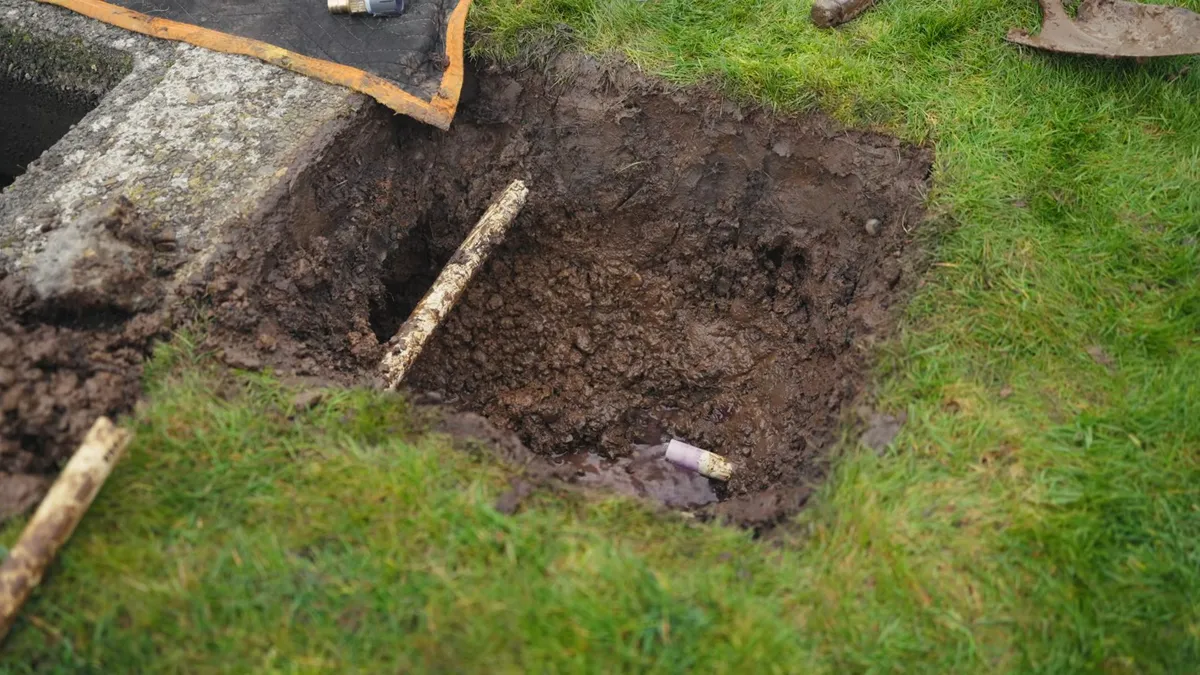
The alluvial soil beneath Maricopa's slab foundations is not uniform desert sand. It contains significant concentrations of clay minerals, particularly smectite and bentonite, that have a distinctive property: they absorb water between their mineral structural layers and physically expand when wet. Research in soil science documents that some of these Arizona clay formations can expand by 10 percent or more in volume when fully saturated. That is not a small change. Applied to the soil column beneath a slab foundation, a 10 percent volume expansion produces measurable upward pressure on the concrete above it.
The expansion does not happen uniformly across the slab area. The soil beneath different sections of the slab has different clay concentrations, different distances from the surface, and different drainage pathways. When monsoon rain arrives after the long Maricopa dry season, one section of soil beneath a slab may absorb moisture and swell faster than an adjacent section. This differential expansion creates what geotechnical engineers call differential heaving: one part of the slab is pushed up while another remains in place. The result is shear stress at the points where plumbing pipes pass through or are attached to the slab.
The critical Maricopa timing factor is the length of the dry season before the monsoon arrives. Maricopa's climate produces near-zero precipitation from October through early June. By the time the first significant monsoon storm arrives in July or August, the clay beneath Maricopa's slabs has contracted to its driest, most shrunken state after 8 to 9 months of drying. The moisture change from bone-dry to saturated in one heavy rain event is the most extreme version of the shrink-swell cycle, and it produces the most stress on underground pipe joints.
How the shrink-swell cycle affects your buried plumbing
Copper supply lines pass through the concrete slab at several points in a typical Maricopa master-planned home: where the main supply line enters through the slab from the GWR service connection, and at each bathroom and kitchen location where the supply branches upward to supply fixtures. These penetration points, where the pipe crosses from the embedded-in-slab zone to the above-slab fixture connections, experience the most concentrated stress from differential slab movement.
During the dry season, the clay contracts and the slab settles slightly. During the monsoon saturation event, the clay expands and the slab lifts. If the lift is uneven, one side of the slab may rise while the pipe penetration point on the other side remains in place, creating a bending force on the copper at the penetration. Over 15 to 20 annual cycles, copper pipe that has also been thinned by hard water corrosion from Global Water Resources is more vulnerable to this bending stress at the penetration point. This is why slab leaks in Maricopa most frequently occur at or near slab penetration points, and why the monsoon season is associated with a measurable increase in slab leak calls.
The lag between the monsoon rainfall event and the appearance of slab leak symptoms is typically 2 to 8 weeks. The soil moisture must penetrate fully to the slab level, the expansion must stress the pipe sufficiently to create a failure, and water must migrate from the failure point upward through the concrete to produce the warm floor spot that the homeowner notices. This is why Maricopa plumbers are busiest for slab leak calls from August through October, after the mid-summer monsoon events have had time to produce their effects on buried plumbing.
What to watch for after significant monsoon events
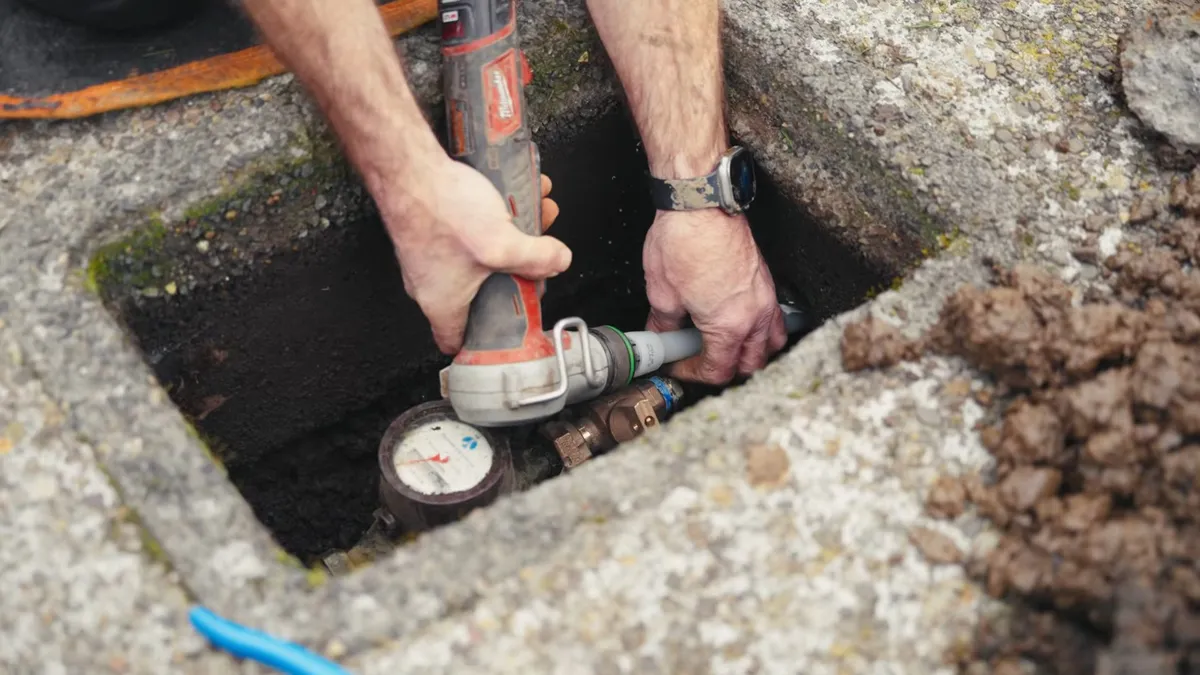
The weeks following the first major monsoon event of the season are the highest-probability window for slab leak detection in Maricopa. Homeowners who are aware of this timing can monitor more actively during August and September. The primary signals to watch for are the warm floor spot (discussed in detail in our warm spot slab leak guide), a Global Water Resources bill that is higher than the same period in prior years when irrigation and household use has not changed, or the faint sound of running water in the home when all fixtures are closed.
Sewer line symptoms also increase after monsoon season. The same soil movement that stresses water supply lines also stresses the sewer lateral running from the home to the GWR sewer main. Clay soil can shift sewer pipe joints out of alignment, allowing root intrusion or soil entry, and can crack older clay or cast-iron pipe that has been in place through many expansion cycles. Slow drains, gurgling sounds at drains when toilets are flushed, or sewage odors that appear after a heavy monsoon event are signals of potential sewer line issues worth a camera inspection.
Pre-monsoon steps to reduce slab leak risk
There are three meaningful steps Maricopa homeowners can take before the monsoon season arrives to reduce their plumbing vulnerability. First, install a water softener if one is not in place. Soft water stops the ongoing copper corrosion that progressively thins the pipe wall, reducing the pipe's vulnerability to the bending stress that monsoon soil movement applies. A softener installed before the 2025 monsoon season does not reverse prior corrosion damage but stops the thinning from advancing further. Second, perform the GWR meter test in June before the monsoon arrives to establish a baseline: a home that shows no active water loss in June and then shows meter movement in August has likely developed a slab leak during the monsoon period. Third, have any slab-adjacent pipe joints that showed abnormal pressure on a prior inspection surveyed before the season. Joints that are already marginally holding will not improve through a monsoon cycle; addressing them proactively is better than addressing a failure mid-season.
For homeowners in Rancho El Dorado, Tortosa, and Cobblestone Farms whose homes are in the 2005-to-2015 construction era, the pre-monsoon meter test is especially worthwhile. These communities have the highest concentration of Maricopa homes in the age range most vulnerable to the monsoon-season slab leak pattern. A meter test in June costs nothing. A detected leak in July before flooring damage has developed costs significantly less to address than a leak discovered in October after months of running underneath the slab.
Monsoon monitoring tip: Set a GWR account alert for daily usage above your household baseline. During the monsoon season, check the alert weekly. A day-over-day increase in nighttime usage (when the household is sleeping and no fixtures are running) is the earliest detectable signal of a slow active leak, appearing before any floor symptom and before the end of a billing cycle.