A confirmed slab leak in a Maricopa home raises an immediate question that plumbers are asked on nearly every detection call: what is the best way to fix it? The answer depends on where the leak is, what condition the surrounding pipe is in, what the home's foundation type is, and what the homeowner's priorities are regarding cost, disruption, and long-term risk. Three repair methods are available for slab leaks in Maricopa's master-planned construction: spot repair, pipe rerouting through walls or attic, and epoxy pipe lining. Each is appropriate in specific circumstances.
The three repair methods: what each involves
Spot repair: direct access at the failure point
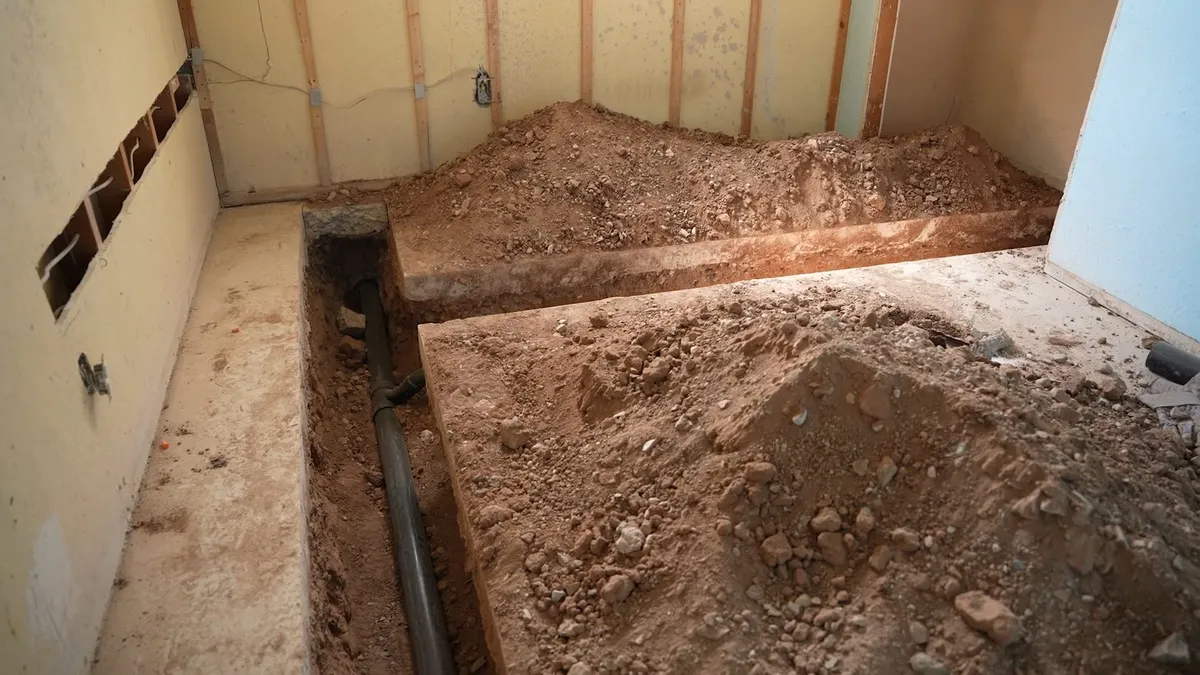
Spot repair opens the concrete at precisely the location where acoustic detection and thermal imaging have confirmed the leak. A concrete saw or rotary hammer creates an access opening typically 6 to 18 inches in diameter, depending on the pipe depth and how much working room is needed. The damaged copper section is exposed, cut out, and replaced with a short section of new copper or PEX with appropriate fittings. The concrete is then patched. The repair point is pressure-tested before the access is closed.
Spot repair is the right choice when the failure is clearly isolated to a single location, when the surrounding pipe shows no signs of additional corrosion or thinning on pressure mapping, and when the pipe can be accessed without encountering the post-tension cables embedded in the slab in newer Maricopa construction. It is the most contained repair in terms of disruption and typically the lowest-cost option for a single, well-defined failure.
The limitation of spot repair is that it addresses only the confirmed failure point. If the same supply loop develops a second failure within the next few years, another spot repair is required. Homeowners in the 2005-to-2010 construction era who have already had one spot repair should discuss whether pressure mapping of the remaining pipe indicates additional risk zones before committing to a second spot repair.
Pipe rerouting: bypassing the slab entirely
Pipe rerouting abandons the failed slab-embedded supply run in place and installs an entirely new supply line running through the home's attic and down interior wall cavities to reach the same fixtures. The old slab-embedded copper is isolated and left in the concrete. New PEX supply lines are run from a manifold or from the main supply through the attic with appropriate insulation protection against Maricopa's extreme attic temperatures (regularly exceeding 150 degrees Fahrenheit in summer), then dropped into wall cavities to each fixture location.
Rerouting is the preferred solution when the failed section is in a difficult-to-access location, when the home is a post-tension slab where concrete cutting carries structural risk, or when pressure mapping reveals that additional sections of the same supply loop are developing weakness. It permanently bypasses all the slab-embedded copper in the rerouted circuit, eliminating the hard water corrosion failure pathway for that entire supply run. The upfront labor cost is higher than spot repair, but it eliminates the risk of a repeat failure in the same loop and avoids future slab access at that location.
A critical Maricopa-specific consideration for attic rerouting is thermal protection of PEX in the attic space. PEX is rated for use in Arizona attics and will not fail from heat alone at normal attic temperatures, but supply lines running through an unconditioned attic space in Maricopa must be insulated to protect against the temperature differential between the hot ambient air and the cooler water flowing through the line. Condensation, thermal cycling stress on fittings, and UV exposure at any exposed attic penetration are all managed with proper insulation installation.
Epoxy pipe lining: trenchless interior repair
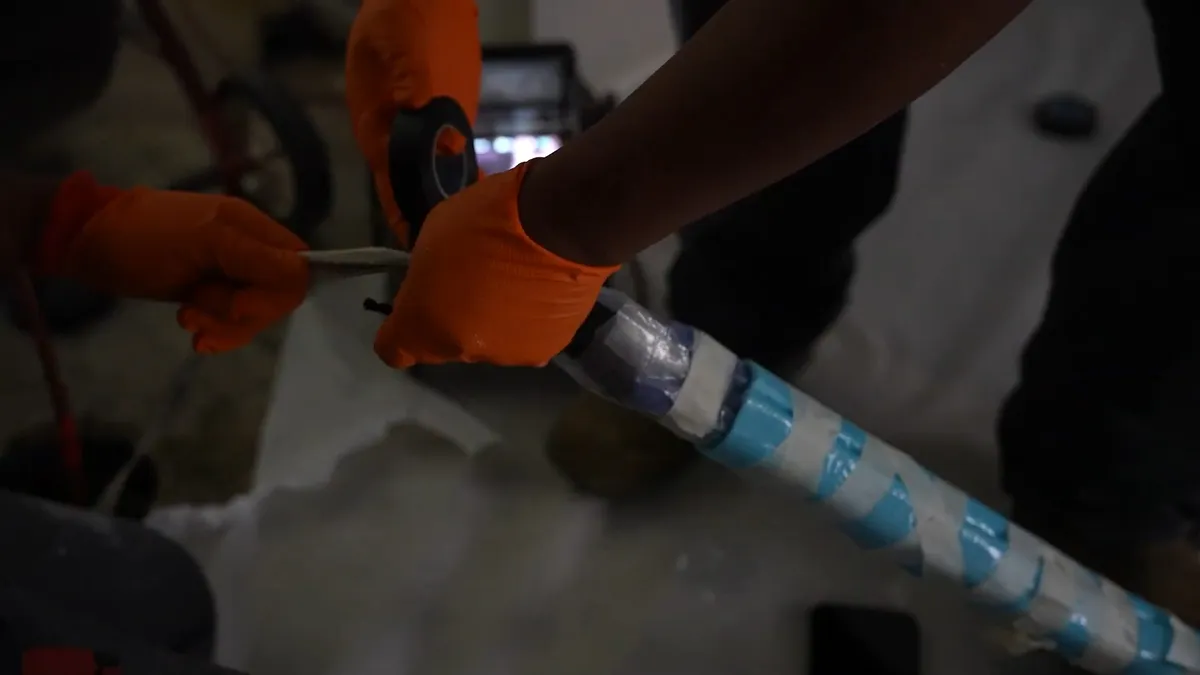
Epoxy lining is a trenchless repair method that rehabilitates the interior of the existing copper pipe without opening the slab. A flexible liner saturated with structural epoxy resin is inserted into the pipe through an access point, inflated against the interior pipe wall, and cured in place with heat or UV light. The result is a new structural pipe lining inside the original copper, sealing pinholes and reinforcing the wall against further corrosion-driven thinning.
Epoxy lining is appropriate for pipes that are still structurally intact, where the failures are pinholes or small cracks rather than collapse or severe corrosion thinning, and where the pipe diameter allows the liner installation tools to pass through. It works well for longer failed sections where spot repair would require multiple concrete access points, and for locations where the slab cannot be opened (under flooring that would be prohibitively expensive to remove and restore, or under post-tension areas).
The limitation of epoxy lining is that it is not appropriate for pipes with large cracks, severely offset joints, or significant diameter reduction from scale accumulation. A pre-lining camera inspection confirms whether the pipe is a candidate. Not every slab leak in Maricopa is appropriate for epoxy lining, but for those that are, it represents the least disruptive resolution and leaves no concrete access holes to patch.
Post-tension slabs: a Maricopa-specific consideration
Many Maricopa homes built after approximately 2000 have post-tension slab foundations rather than conventional reinforced concrete. Post-tension slabs contain high-strength steel cables under tension, typically embedded 3 to 4 inches below the slab surface, that provide structural reinforcement. These cables are indicated by red warning labels on the slab edge or visible in the foundation contractor's documentation.
Cutting a post-tension cable during concrete access for a spot repair can cause catastrophic structural damage to the slab. Before any concrete cutting is planned for a spot repair in a post-tension slab, the plumber must identify the cable locations and confirm the proposed access point does not intersect any cable path. Ground-penetrating radar (GPR) is the definitive tool for locating cables prior to cutting. In cases where the leak falls directly under a cable path, rerouting or epoxy lining is the required alternative to spot repair.
We identify post-tension slabs during the pre-repair assessment and adjust the repair plan accordingly before any concrete saw is engaged. This step is not optional in post-tension construction, which is common throughout Maricopa's master-planned communities from the 2008-to-2020 era.
HOA and insurance considerations for Maricopa slab leak repairs
Rancho El Dorado, Province, and other master-planned Maricopa communities have HOA rules that govern exterior modifications, contractor access hours, and restoration standards for work that affects driveways or exterior concrete. A spot repair that requires opening the driveway to access a supply line running under it requires HOA notification and, in some communities, prior approval. Province has specific contractor documentation requirements. We advise on HOA coordination requirements during the estimate visit for any repair that touches exterior surfaces or driveways.
Homeowners insurance in Arizona typically covers the water damage caused by a slab leak, including flooring, drywall, and personal property. The cost of the pipe repair itself and the concrete access work are generally excluded from standard policies. Some policies include coverage for opening the slab to access the pipe, described as "access and closure" coverage. The repair documentation we provide, including the cause of failure and the repair method, supports homeowners insurance claims for the water damage portion of the loss.
For any confirmed slab leak where the repair method has not yet been selected, we present all three options with pricing, pros and cons, and our professional recommendation before any work begins. The choice between spot repair, rerouting, and epoxy lining is yours to make with complete information about what each involves and what it costs for your specific home and failure location.