
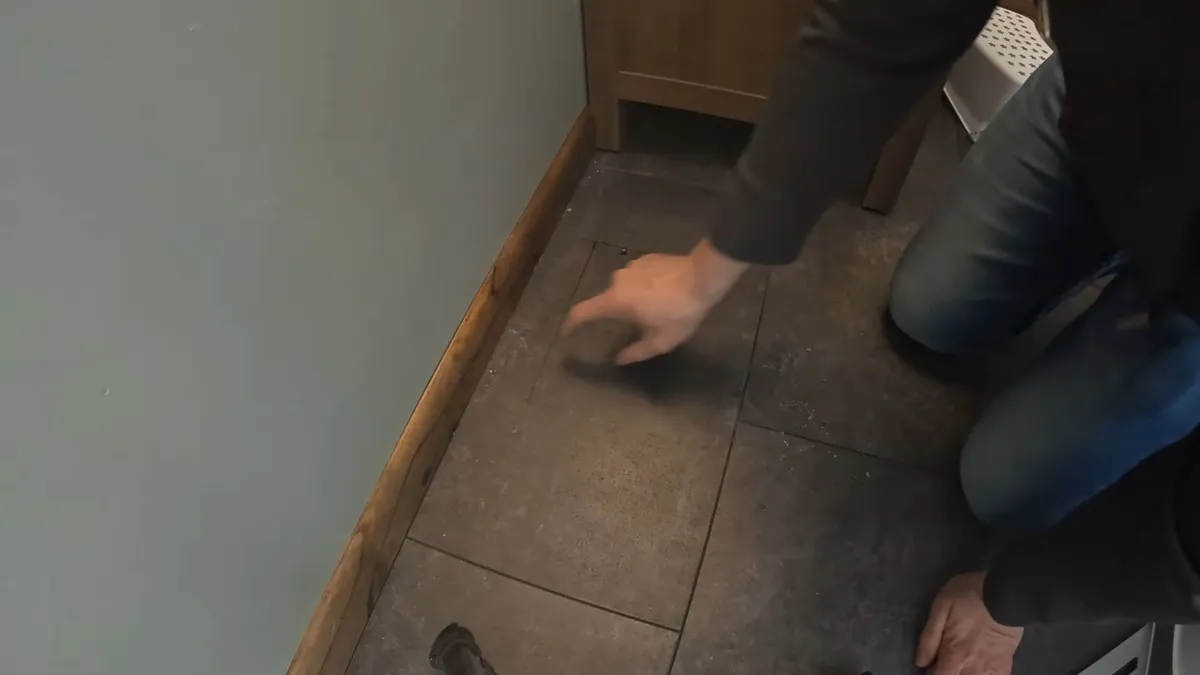
Walking barefoot across your kitchen tile and feeling a patch that is noticeably warmer than the surrounding floor is one of the most reliably alarming experiences in home ownership. It should be. A warm spot on a concrete slab floor is one of the most consistent early signals of a hot water line leaking beneath your home's foundation — what plumbers call a slab leak. In Maricopa, where most homes were built between 2005 and 2020 on copper-supply slab-on-grade foundations, slab leaks are not uncommon. Knowing what the warm spot means, how to confirm it, and what to do next can prevent thousands of dollars in damage.
Why warm spots happen in Maricopa homes specifically
Most of Maricopa's master-planned homes were built with copper hot and cold water supply lines embedded in the concrete slab at or near the floor level. The concrete poured around these lines is typically 4 to 6 inches thick. When a hot water line develops a pinhole leak, water at 120 to 130 degrees Fahrenheit escapes under the supply pressure (typically 55 to 75 PSI in a Global Water Resources-served home) and pools in the space between the pipe and the surrounding concrete. That heat conducts upward through the concrete slab and registers as a warm zone on the tile surface above the leak.
The warm spot is not an immediate sign that your foundation is in serious trouble. It is an early sign that a leak has been running long enough to heat the concrete. Early detection, while the symptom is still a subtle warmth rather than wet flooring or visible cracking, gives you the best possible range of repair options and prevents the secondary damage that develops when a slab leak runs undetected for weeks or months.
Maricopa's specific risk factors accelerate the timeline from new home to first slab leak. Global Water Resources groundwater at 25 to 35 GPG corrodes copper pipe walls through an internal pitting mechanism that is faster than in CAP-served markets. The Pinal Valley alluvial clay beneath Maricopa's slab foundations shifts seasonally — contracting during the long dry months and swelling when monsoon rains arrive. That cyclic movement stresses the pipe at the point where it penetrates the slab or at joints in the embedded run. Homes from the 2005-to-2015 period are now 10 to 20 years old, which is exactly the age range where these two failure mechanisms converge.
The DIY meter test: confirming you have an active leak
Before calling a plumber for a slab leak inspection, you can perform a simple meter test that tells you within 30 minutes whether an active water loss is occurring somewhere in your home's supply system. This takes 10 minutes of your time and costs nothing.
- Close every water fixture in the house. Shut off faucets, make sure the dishwasher and washing machine are not running, and confirm the irrigation system is in its off state.
- Check your toilets. A running toilet can mimic a slow leak on the meter. Put a few drops of food coloring in the tank of each toilet. If color appears in the bowl within 15 minutes without flushing, you have a running toilet; repair that first before doing the meter test.
- Locate and read your Global Water Resources meter. The meter is typically in a small box set into the ground near the street at your property line. Most GWR meters have a small triangular or star-shaped low-flow indicator that rotates when any water is moving through the meter.
- Observe the low-flow indicator for 2 to 3 minutes with all fixtures confirmed closed. If the indicator is moving, water is flowing somewhere between the meter and your closed fixtures. That is a confirmed active leak.
- If the indicator is still, note the meter reading, wait 30 minutes without using any water, and check again. A higher reading with no water used confirms a slow leak that may be too small to show on the low-flow indicator.
Other slab leak signals that often appear alongside the warm spot
A warm floor spot is rarely the only signal a slab leak produces. Homeowners who recognize multiple signals from this list are in a stronger position to act quickly:
- A Global Water Resources bill that has increased by $30 to $100 or more without any change in household usage. A pinhole leak at 60 PSI can waste 100 to 200 gallons per day. At GWR rates, that is a measurable monthly increase.
- The sound of running water when all fixtures are closed, especially audible at night when the house is quiet. The water escaping from the leak point into the space between the pipe and the surrounding concrete creates a detectable flow sound.
- Soft, damp, or discolored flooring in areas adjacent to the warm spot. Water migrating upward through the slab into wood, laminate, or tile can appear as swelling, discoloration, or loose grout before visible moisture is present at the surface.
- A musty or mildew smell near baseboards at floor level, particularly in bathrooms or kitchens directly above supply line paths. Water saturating the slab and migrating into the wall cavity from beneath creates mold-favorable conditions before the wall surface shows any visible sign.
- Reduced water pressure at fixtures throughout the home, not just at one tap. A supply line leak large enough to produce a warm floor spot also reduces the available pressure for fixtures on the same supply loop.
What happens when a slab leak goes undetected in a Maricopa home
The sequence of damage from an undetected slab leak follows a predictable path in Maricopa's construction type. In the first days to weeks, water pools beneath the slab and begins migrating upward through the concrete and outward through the soil beneath the foundation. The warm floor spot is the only visible indicator at this stage.
Over weeks to months, the soil beneath the slab becomes saturated in the leak zone. The alluvial clay of the Pinal Valley, which already shifts seasonally, becomes further destabilized when water is continuously introduced. Differential settlement can begin in the saturated zone while adjacent areas remain stable, producing the uneven forces on the foundation that eventually manifest as cracks in the drywall, gaps at ceiling-wall joints, or tiles that come loose from the floor.
Simultaneously, the water migrating upward through the slab enters the subfloor space, saturating any wood underlayment, then the flooring adhesive, then the finished flooring itself. Tile grout absorbs moisture and weakens. Wood-based flooring swells, buckles, or develops a hollow sound underfoot. Mold establishes behind baseboards within days of the flooring becoming consistently damp in a Maricopa summer.
By the time visible damage appears in the flooring or walls, the slab leak has typically been running for weeks, and the repair scope has expanded from a contained plumbing fix to a combined plumbing and restoration project. Early detection based on the warm spot or the meter test prevents that expansion.
What to do right now if you suspect a slab leak
If the meter test confirms active water loss and you can locate a warm spot on your floor, close the main water shut-off valve at the house if you are seeing active moisture spread. The main shut-off in most Maricopa master-planned homes is near the water meter at the street or in the garage. Closing it stops further water loss while you arrange professional detection.
Call a licensed plumber for slab leak detection. Electronic acoustic detection and thermal imaging locate the leak to within a few inches before any concrete is opened, which means the smallest possible concrete access is needed for the repair. You will be presented with repair options (spot repair at the failure point, pipe rerouting through walls or attic, or epoxy lining for multi-point failures) with pricing for each before any work begins.
Do not delay the call based on uncertainty. The meter test result and the warm floor spot together are sufficient indicators to warrant professional detection. The detection appointment typically takes 1 to 3 hours. The peace of mind from knowing exactly what you are dealing with, or confirming that the warm spot has a benign cause, is worth the service call cost.
If you feel a warm spot on your floor right now: Do the meter test described above before calling. If the meter confirms active water loss, locate and close your main water shut-off to limit further damage, then call for detection. If the meter shows no movement, keep monitoring your GWR bill over the next 1 to 2 billing cycles while watching for additional symptoms. A plumber's inspection is still warranted if you remain concerned.